Influencers Are the New Editors
Earned media has changed, are you keeping up?
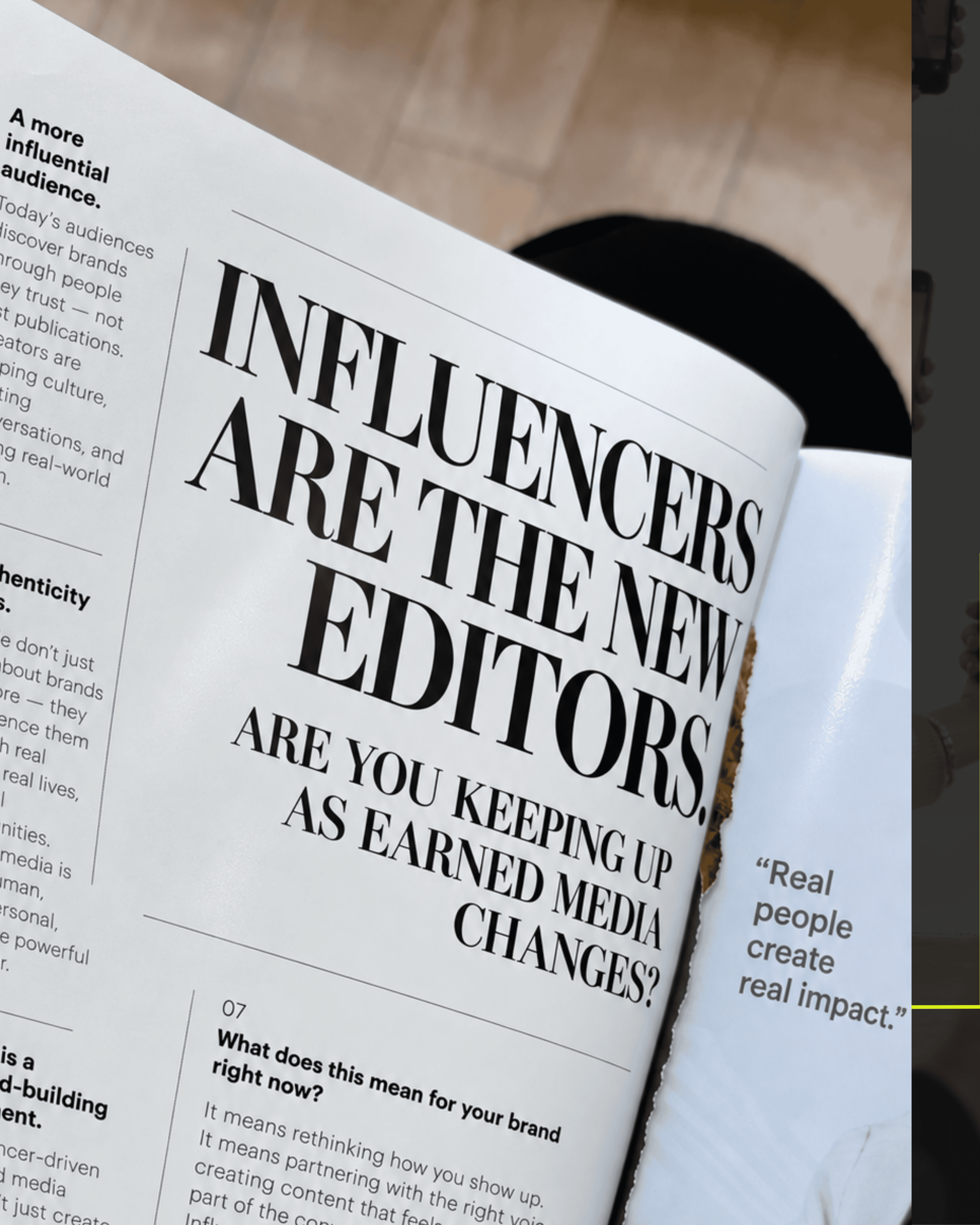
There was a time when editors decided what mattered. They determined which people appeared on magazine covers, which products made it onto recommendation pages and which ideas entered the cultural conversation. Their choices didn’t simply reflect culture - they helped create it.
The Devil Wears Prada captured that power perfectly. Miranda Priestly wasn’t portrayed as someone merely selecting clothes for a magazine. Her decisions moved through designers, retailers and popular culture until they eventually shaped what millions of people wore, wanted and believed was relevant. Editors were the gatekeepers of attention. What they chose to cover received credibility, visibility and cultural currency. What they ignored often remained invisible.
For brands, getting through that gate required more than buying media. It required PR. But that's changed.
The Age of Earned Influence
Before social feeds, PR professionals competed for “in-book” placements: a product mention, a trend story, a quote or - if everything aligned - a full editorial feature.
Getting there took work. Press previews, product gifting, deskside meetings, editor lunches and carefully constructed pitches were all designed to give an editor a genuine reason to care. PR teams had to understand what the publication covered, what interested a particular editor and how a brand could credibly contribute to a larger story.
And even after all that effort, coverage was never guaranteed. That was the fundamental value of earned media. A brand couldn’t simply purchase an editor’s opinion. Advertising and editorial existed alongside each other, but at least in principle, there was a line between them.
The magazine might sell a full-page advertisement to one brand while independently recommending another in its editorial pages. Readers understood that those placements carried different meanings. One was bought. The other was earned. That editorial validation was valuable precisely because the brand did not fully control it.
The Evolution of Influence
Editors and journalists still matter, but they no longer command public attention in the way they once did. Audiences have moved from magazines and television programs to social feeds, creator channels, podcasts and digital communities. In the process, much of the editor’s power has migrated to influencers and creators.
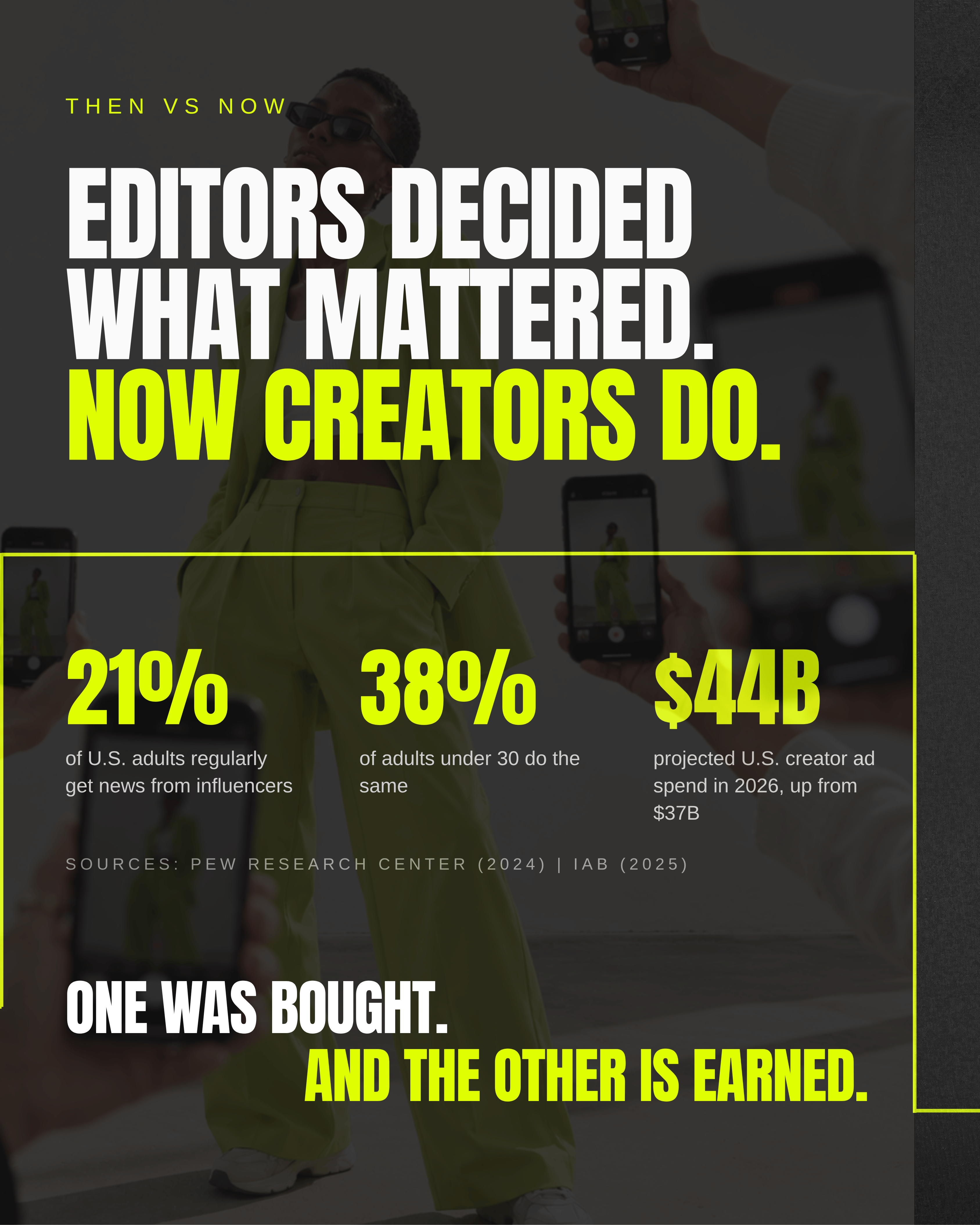
According to Pew Research Center, 21% of U.S. adults regularly get news from influencers. Among adults ages 18 to 29, that figure rises to 38%. Meanwhile, U.S. creator advertising spend reached an estimated $37 billion in 2025 and is projected to reach approximately $44 billion in 2026. The money is following the attention.
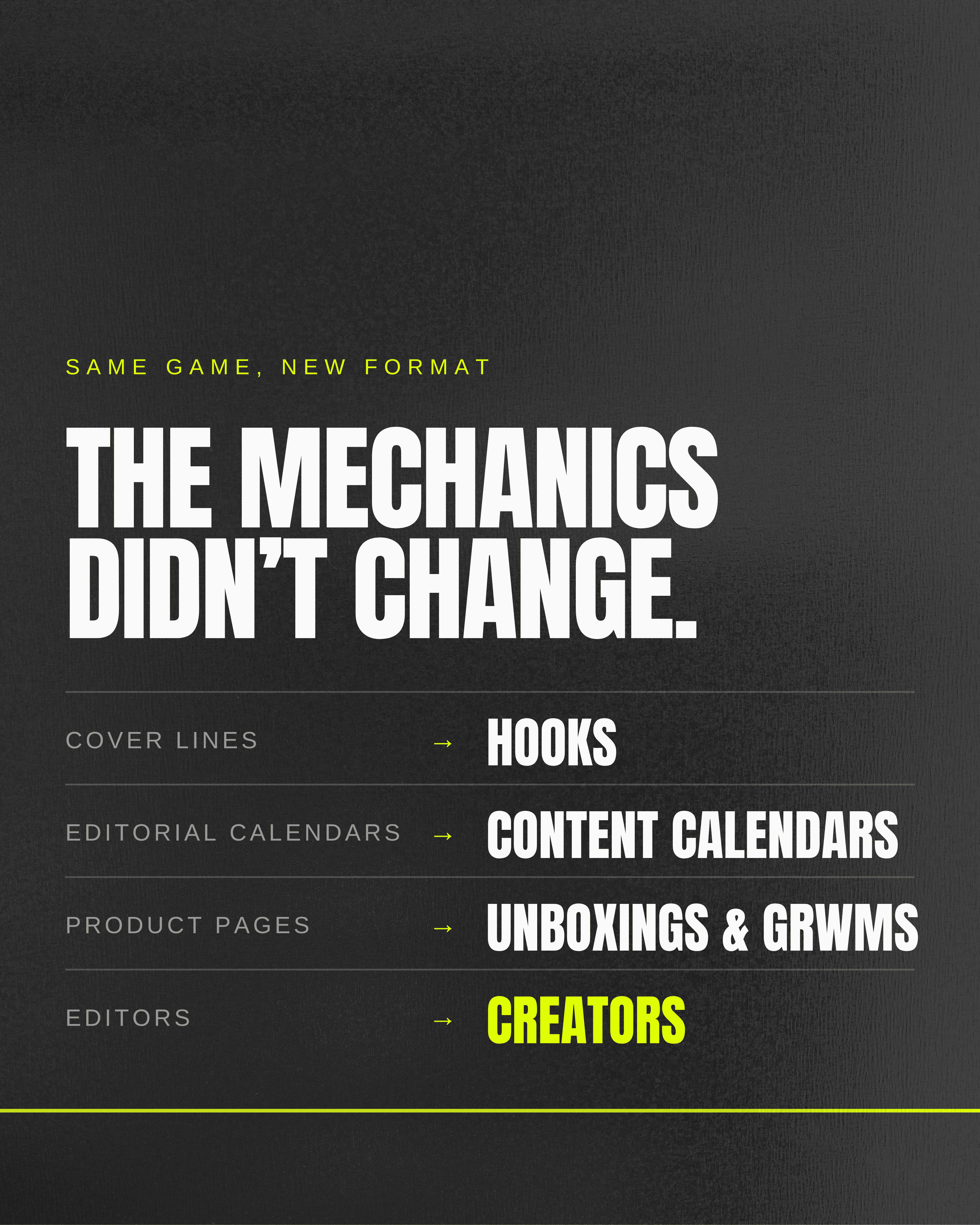
But the mechanics of influence haven’t changed as much as we might think. Magazine cover lines designed to stop someone at a newsstand have become lead-in-hooks designed to stop the scroll. Editorial calendars have become content calendars. Product pages have become tutorials, unboxings and “get ready with me” videos. The polished recommendation from a trusted publication has become a creator speaking directly to a community that follows them every day.
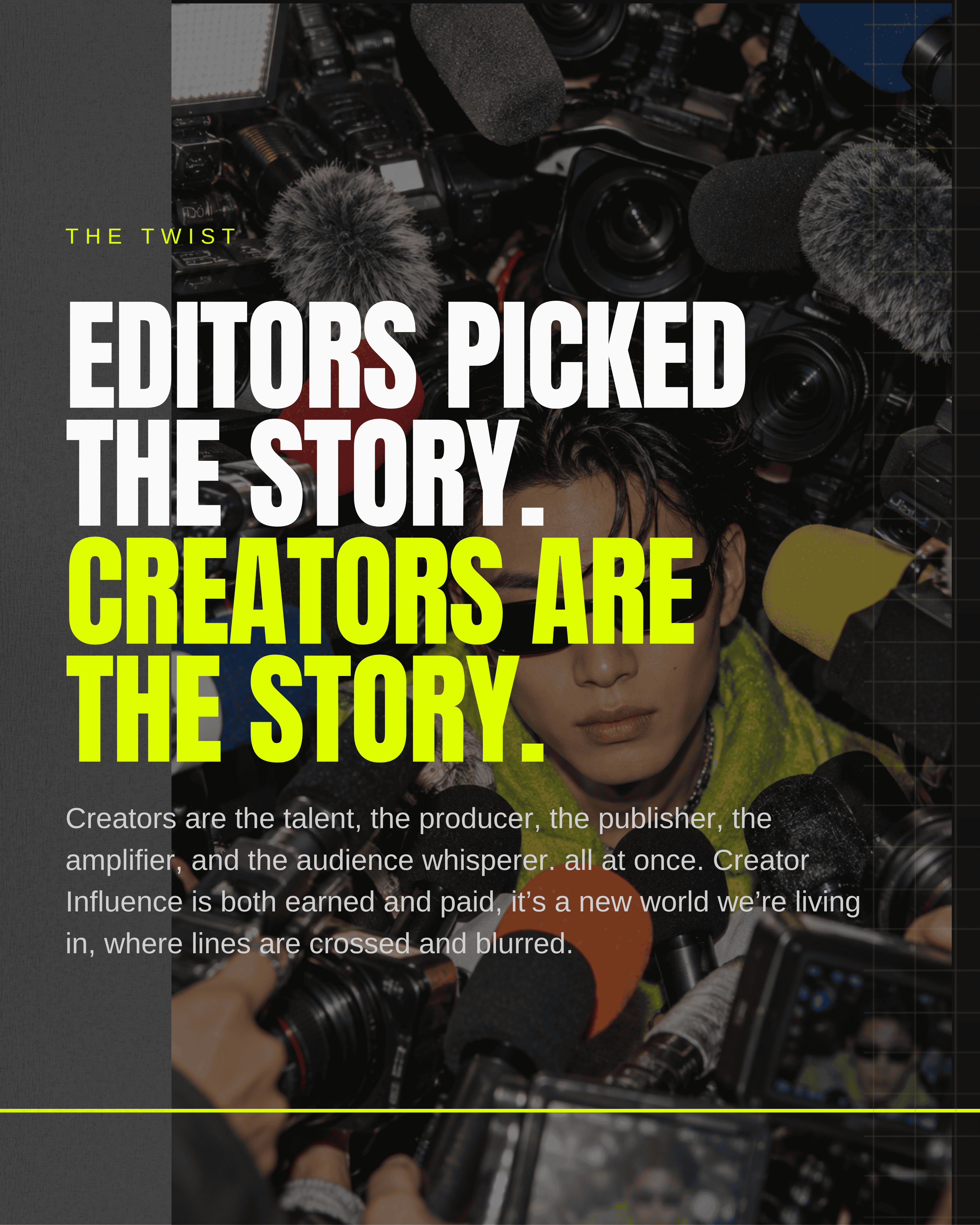
Like editors before them, creators decide what gets surfaced, contextualized and discussed. They introduce products, validate trends and shape the way audiences interpret cultural moments.
But creators do something traditional editors generally did not: they frequently make themselves part of the story.
They aren’t only selecting or interpreting content. They are the talent, the production company, the publisher, the distribution channel and the audience relationship - all at once. That makes their influence extraordinarily powerful. It also makes the line between earned and paid media far more complicated.
When Earned and Paid Collide
Traditional media created a structural separation - however imperfect - between editorial coverage and advertising. The creator economy doesn’t operate that way. An influencer’s feed might include a genuinely organic recommendation, a gifted product, an affiliate link, a paid brand integration and a long-term ambassadorship. To the audience, those pieces of content may look and feel remarkably similar.
A single creator can provide:
- Organic editorial attention
- Paid product integration
- Branded content production
- Affiliate or performance marketing
- Event attendance and amplification
- Long-term brand ambassadorship
- Product or campaign collaboration
- Content licensing and usage rights
- Access to a highly engaged community
The same person may independently discover a product one month and enter into a paid partnership with that brand the next. So, are influencers earned media or paid media? The answer is both -- and increasingly, everything in between.
Influencers have inherited much of the cultural power once held by editors, but they have not inherited the same institutional separation between editorial judgment and advertising. Instead, the system relies on disclosure, audience awareness and the creator’s willingness to protect the trust they have built. The most thoughtful creators are highly selective about their partnerships because they understand that trust is their most valuable asset. Every brand relationship puts some portion of that credibility on the line.
Brands are therefore not simply buying reach. They are asking to participate in a relationship between a creator and their community. That requires a very different approach from purchasing an ad - and a far more sophisticated strategy than sending free products and hoping for a post.
What Brands and PR Agencies Must Do Now
PR has always been built around relationships, relevance and earned credibility. That should make influencer engagement a natural extension of the discipline. In practice, however, the industry’s evolution has been uneven.
Many PR agencies now work extensively with creators and influencers, while others are approaching them primarily through gifting, event invitations and campaign-by-campaign outreach. Meanwhile, brands are increasingly directing influencer budgets to specialized agencies that understand creator strategy, commercial structures, content development and execution. That leaves a growing opportunity between traditional PR and influencer marketing. The answer is not to treat every creator relationship as paid media. Nor is it to pretend that influencer attention can always be earned through a clever pitch and a product sample.
Brands and their agency partners need to understand the full spectrum of creator relationships:
- When a story is strong enough to earn organic attention
- When compensation is appropriate
- When a one-time integration makes sense
- When a long-term relationship would be more credible
- When a creator should amplify the brand’s story
- And when the creator should help develop the story from the beginning
The strongest creator partnerships are not built by handing someone a finished script. They begin by understanding the creator’s point of view, their audience and the kind of content people trust them to make. It is less about inserting a brand into a creator’s content and more about finding the authentic intersection between the brand’s story and the creator’s own.
The Dreamer Doer Take
This is the new influence ecosystem: part PR, part creative, part media, part talent partnership and part community-building. Most brands are only working with one or two of those pieces at a time.
This convergence is tricky and nuanced. And that’s what we do. We help brands and PR agencies find the right creators, decide when attention should be earned and when it should be paid, and use technology to move faster without losing the human judgment that makes a partnership most interesting and credible.
That may mean earning attention, building a paid partnership, co-creating content, integrating creators into an experience, building experiences that give creators reasons to share, or developing a relationship that compounds over time. The opportunities are limitless.